Yes...

Yes...
You can use this old faerie call: "Come out from your faerie bower... Come out on this golden hour... Come out to me faeries, please, faeries dancing on the breeze."

Saturday, June 16, 2018

Hummingbirds & Their Food...

For nutrition, hummingbirds eat a variety of insects, including mosquitoesfruit flies, and gnats in flight or aphids on leaves and spiders in their webs. The lower beak of hummingbirds is flexible and can bend as much as 25 degrees when it widens at the base, making a larger surface for catching insects.  Hummingbirds hover within insect swarms in a method called "hover-hawking" to facilitate feeding.
To supply energy needs, hummingbirds drink nectar, a sweet liquid inside certain flowers. Like bees, they are able to assess the amount of sugar in the nectar they eat; they normally reject flower types that produce nectar that is less than 10% sugar and prefer those whose sugar content is higher. Nectar is a mixture of glucose, fructose, and sucrose, and is a poor source of nutrients, requiring hummingbirds to meet their nutritional needs by consuming insects.
Hummingbirds do not spend all day flying, as the energy cost would be prohibitive; the majority of their activity consists simply of sitting or perching. Hummingbirds eat many small meals and consume around half their weight in nectar (twice their weight in nectar, if the nectar is 25% sugar) each day.[100]Hummingbirds digest their food rapidly due to their small size and high metabolism; a mean retention time less than an hour has been reported. Hummingbirds spend an average of 10–15% of their time feeding and 75–80% sitting and digesting.
Because their high metabolism makes them vulnerable to starvation, hummingbirds are highly attuned to food sources. Some species, including many found in North America, are territorial and will try to guard food sources (such as a feeder) against other hummingbirds, attempting to ensure a future food supply for itself. Additionally, hummingbirds have an enlarged hippocampus, a brain region facilitating spatial memory used to map flowers previously visited during nectar foraging.
Hummingbird beaks are flexible[98] and their shapes vary dramatically as an adaptation for specialized feeding.  Some species, such as hermits (Phaethornis spp.) have long bills that allow them to probe deep into flowers with long corollae. Thornbills have short, sharp bills adapted for feeding from flowers with short corollae and piercing the bases of longer ones. The sicklebills' extremely decurved bills are adapted to extracting nectar from the curved corollae of flowers in the family Gesneriaceae. The bill of the fiery-tailed awlbill has an upturned tip, as in the avocets. The male tooth-billed hummingbird has barracuda-like spikes at the tip of its long, straight bill.
The two halves of a hummingbird's bill have a pronounced overlap, with the lower half (mandible) fitting tightly inside the upper half (maxilla). When a hummingbird feeds on nectar, the bill is usually opened only slightly, allowing the tongue to dart out and into the interior of flowers. Hummingbird bill sizes range from about 5 mm to as long as 100 mm (about 4 in). When catching insects in flight, a hummingbird's jaw flexes downward to widen the gape for successful capture.

Perception of sweet nectar

Perception of sweetness in nectar evolved in hummingbirds during their genetic divergence from insectivorous swifts, their closest bird relatives. Although the only known sweet sensory receptor, called T1R2, is absent in birds, receptor expression studies showed that hummingbirds adapted a carbohydrate receptor from the T1R1-T1R3 receptor, identical to the one perceived as umami in humans, essentially repurposing it to function as a nectar sweetness receptor. This adaptation for taste enabled hummingbirds to detect and exploit sweet nectar as an energy source, facilitating their distribution across geographical regions where nectar-bearing flowers are available.

Tongue as a micropump[edit]

Hummingbirds drink with their tongues by rapidly lapping nectar. Their tongues have tubes which run down their lengths and help the hummingbirds drink the nectar. While capillary action was believed to be what drew nectar into these tubes, high-speed photography has revealed that the tubes open down their sides as the tongue goes into the nectar, and then close around the nectar, trapping it so it can be pulled back into the beak. The tongue, which is forked, is compressed until it reaches nectar, then the tongue springs open, the rapid action traps the nectar and the nectar moves up the grooves, like a pump action, with capillary action not involved. Consequently, tongue flexibility enables accessing, transporting and unloading nectar.

Feeders and artificial nectar

In the wild, hummingbirds visit flowers for food, extracting nectar, which is 55% sucrose, 24% glucose and 21% fructose on a dry-matter basis.[112] Hummingbirds also take sugar-water from bird feeders. Such feeders allow people to observe and enjoy hummingbirds up close while providing the birds with a reliable source of energy, especially when flower blossoms are less abundant. A negative aspect of artificial feeders, however, is that the birds may seek less flower nectar for food, so reduce the amount of pollination their feeding naturally provides.[113]
White granulated sugar is the best sweetener to use in hummingbird feeders. A ratio of 1 part sugar to 4 parts water, or 25% concentration, is a common recipe,[114] although hummingbirds will defend feeders more aggressively when sugar content is at 35%, indicating preference for nectar with higher sweetnessand sugar content.  it to the nectar. Some people speculate red dye could be bad for the birds, although this claim has not received scientific attention. Commercial products sold as "instant nectar" or "hummingbird food" may also contain preservatives and/or artificial flavors as well as dyes, and are not necessary, although the long-term effects of these additives on hummingbirds have not been systematically studied. Although some commercial products contain small amounts of nutritional additives, hummingbirds obtain all necessary nutrients from the insects they eat, rendering added nutrients unnecessary.
Other animals also visit hummingbird feeders. Bees, wasps, and ants are attracted to the sugar-water and may crawl into the feeder, where they may become trapped and drown. Orioleswoodpeckersbananaquitsraccoons and other larger animals are known to drink from hummingbird feeders, sometimes tipping them and draining the liquid. In the southwestern United States, two species of nectar-drinking bats (Leptonycteris yerbabuenae and Choeronycteris mexicana) visit hummingbird feeders to supplement their natural diet of nectar and pollen from saguaro cacti and agaves.
Hummingbirds hovering at an artificial nectar feeder

Visual cues of foraging

Hummingbirds have exceptional visual acuity providing them with discrimination of food sources while foraging. Although it is commonly believed that hummingbirds are attracted to color while seeking food, such as red flowers or artificial feeders, experiments indicate that location and flower nectar quality are the most important "beacons" for foraging.  Hummingbirds depended little on visual cues of flower color to beacon to nectar-rich locations, but rather they used surrounding landmarks to find the nectar reward.
In at least one hummingbird species – the green-backed firecrown (Sephanoides sephaniodes) – flower colors preferred are in the red-green wavelength for the bird's visual system, providing a higher contrast than for other flower colors. Further, the crown plumage of firecrown males is highly iridescent in the red wavelength range (peak at 650 nanometers), possibly providing a competitive advantage of dominance when foraging among other hummingbird species with less-colorful plumage. The ability to discriminate colors of flowers and plumage is enabled by a visual system having four single cone cells and a double cone screened by photoreceptor oil dropletswhich enhance color discrimination.

Sunday, June 10, 2018

Germans, Beer & Hops, --- The Way of It All... :)


   That's hops, above...  My grandma was from Bavaria, where they make great beer.  She made her own beer in her basement.  It was a dark beer, flavored with hops from the vines that she grew on a trellis in her backyard in Cleveland. 

Here's a few things you may not know about beer in Germany...

The Reinheitsgebot ("purity decree"), sometimes called the "German Beer Purity Law" or the "Bavarian Purity Law" in English, was a regulation concerning the production of beer in Germany.
In the original text, the only ingredients that could be used in the production of beer were water, barley, and hops, which had to be added only while the wort was boiling. After its discovery, yeast became the fourth legal ingredient. For top fermenting beers, the use of sugar is also permitted.
There is a dispute as to where the Reinheitsgebot originated. Some Bavarians point out that the law originated in the city of Ingolstadt in the duchy of Bavaria on 23 April 1516, although first put forward in 1487, concerning standards for the sale and composition of beer.
Thuringians point to a document which states the ingredients of beer as water, hops, and barley only, and was written in 1434 in Weißensee (Thuringia). It was discovered in the medieval Runneburg near Erfurt in 1999.[5] Before its official repeal in 1987, it was the oldest food-quality regulation in the world.

Pale beers

  • Export — a pale lager brewed around Dortmund that is fuller, maltier and less hoppy than Pilsner. 12-12.5° Plato, 5-5.5% ABV. Germany's most popular style in the 1950s and 1960s, it is now becoming increasingly rare.
  • Helles — a malty pale lager from Bavaria of 11-12° Plato, 4.5-5% ABV.
  • Kölsch — pale, light-bodied, top-fermented, beer which, when brewed in Germany, can only legally be brewed in the Cologne region. 11-12° Plato, 4.5-5% ABV.
  • Maibock — a pale, strong lager brewed in the spring. 16-17° Plato, 6.5-7% ABV.

Märzen at Oktoberfest, served in the traditional 1-litre Maß.
  • Märzen — medium body, malty lagers that come in pale, amber and dark varieties. 13-14° Plato, 5.2-6% ABV. The type of beer traditionally served at the Munich Oktoberfest.
  • Pilsener — a pale lager with a light body and a more prominent hop character. 11-12° Plato, 4.5-5% ABV. By far the most popular style, with around two thirds of the market.
  • Spezial — a pale, full, bitter-sweet and delicately hopped lager. 13-13.5° Plato, 5.5-5.7% ABV.

Dark beers

  • Altbier — a top-fermented, lagered beer. It is brewed only in Düsseldorf and in the Lower Rhine region. Its origins lie in Westphalia, and there are still a few Altbier breweries in this region. Tastes range from mildly bitter and hoppy to exceptionally bitter. About ten breweries in the Düsseldorf region brew Altbier at 5%-6.5% ABV.
  • Bock — a heavy-bodied, bitter-sweet lager darkened by high-coloured malts. 16-17° Plato, 6.5-7% ABV.
  • Doppelbock — a very strong, very full-bodied lager darkened by high-coloured malts. 18-28° Plato, 8-12% ABV.
  • Dunkel — a dark lager which comes in two main varieties: the sweetish, malty Munich style and the drier, hoppy Franconian style.
  • Schwarzbier — a bottom-fermented, dark lager beer. 11-12° Plato, 4.5-5% ABV.

  • Drinkware

    Weizen glass


    A glass of Weizen
    Weizen glass is used to serve Weizenbier.
    Originating in Germany, the glass is narrow at the bottom and slightly wider at the top; the width both releasing aroma, and providing room for the often thick, fluffy heads produced by wheat beer.[22] It tends to be taller than a pint glass, and generally holds 500 millilitres with room for foam or "head". In some countries, such as Belgium, the glass may be 250 ml or 330 ml.
    Wheat beers tend to foam a lot, especially if poured incorrectly. A customary manner is to swirl around a bit of (preferably cold) water in the glass to wet it and afterwards pouring the beer slowly, holding the glass in an angle of approximately 45 °.

    Beer stein

    beer stein (or simply a stein /ˈstn/ STYNE) is an English neologism for a traditional type of beer mug. Steins may be made of stoneware (rarely the inferior earthenware), pewterporcelainsilverglass, or wood. They may have open tops or may have hinged pewter lids with a thumb-lever.
    Steins usually come in sizes of a half litre or full litre (or comparable historical sizes). Like decorative tankards, they are often decorated in nostalgic themes, generally showing allusions to Germany or Bavaria.
    It is believed by some that the lid was implemented during the time of the Black Plague to prevent diseased flies from getting into the beer.

    Maß

    The Maß (pronounced [mas]) is a term used in German-speaking countries for a unit of volume, now typically used only for measuring beer sold for immediate on-site consumption. In modern times, a Maß is defined as exactly 1 litre. As a maß is a unit of measure, various designs are possible: modern maß krugs are often handled glass tankards, although they may also be in the form of steins. At the Octoberfest beer isavailable in maß Krug or half litre 'Halb' .

    Stange and Becher

    Stange (stick or rod) is a cylindrical glass that is traditionally used for Kölsch beer. A Becher (tumbler), traditionally used for Altbier, is similar to a Stange but is slightly shorter and much thicker. Stangen are carried by placing them into holes in a special tray called a Kranz (wreath). In Cologne Stanges are usually served by traditional waiters called Köbes.

    Pilstulpe 

    Beer bootThe Pilstulpe ("Pilsner Tulip") or Biertulpe ("Beer tulip") is the tradition glass for German pilsner beers. Sizes are typically around 300 millilitres (11 imp fl oz; 10 US fl oz), but can be as large as 500 millilitres (18 imp fl oz; 17 US fl oz). When used in restaurant settings, a small piece of absorbent paper is placed around the base to absorb any drips from spilling or condensation.

    In Germany, beer boots usually contain between 2 and 4 litres and are passed from one guest at the table to the next one clockwise. When almost reaching the bottom of the boot, it suddenly starts bubbling. By some accounts, drinker who caused the bubbling has to order the next boot. There are also boots known with 6 and 8 litres. That being said, beer boots are almost never seen in Germany, even among friends who do drink as much and more beer on an evening out together; normal glasses are preferred.Beer boots (Bierstiefel in German) have over a century of history and culture behind them. It is commonly believed that a general somewhere promised his troops to drink beer from his boot if they were successful in battle. When the troops prevailed, the general had a glassmaker fashion a boot from glass to fulfill his promise without tasting his own feet and to avoid spoiling the beer in his leather boot. Since then, soldiers have enjoyed toasting to their victories with a beer boot. At gatherings in Germany, Austria, and Switzerland, beer boots are often passed among the guests for a festive drinking challenge. Since the movie Beerfest appeared in 2006, beer boots have become increasingly popular in the United States. Glass beer boots are either manufactured using a mold or from mouth-blown glass by skilled artisans.

    Beer festivals


    Inside a tent at Munich's Oktoberfest - the world's largest beer festival
    Oktoberfest is a 16- to 18-day festival held annually in MunichBavariaGermany, running from late September to the first weekend in October. Only beer which is brewed within the city limits of Munich with a minimum of 13.5% Stammwürze (approximately 6% alcohol by volume) is allowed to be served in this festival. Upon passing this criterion, a beer is designated Oktoberfest Beer. Large quantities of German beer are consumed, with almost 7 million liters served during the 16-day festival in 2007. Recently in 2015 the festival officially served 7.3 million liters of beer.


Saturday, June 9, 2018

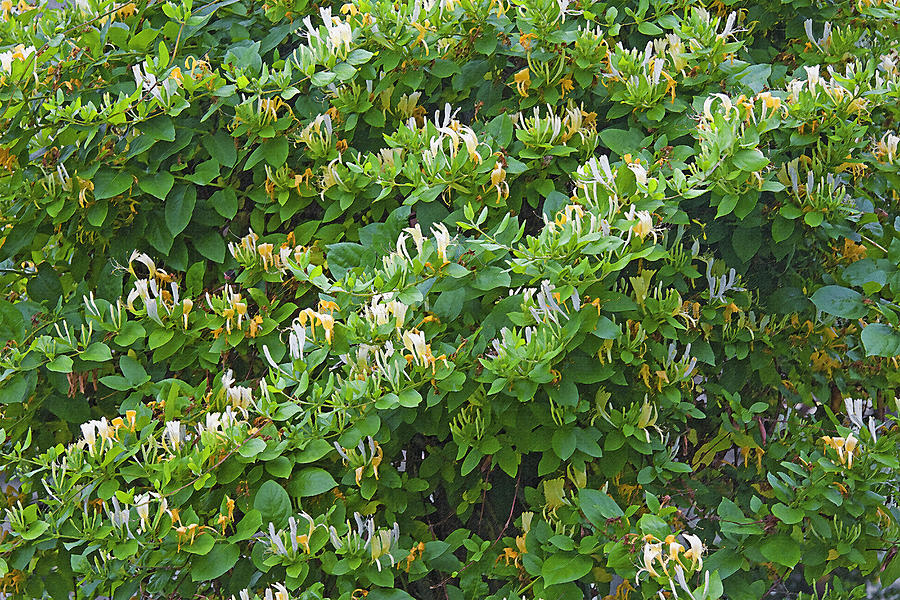
Why Not Plant A Honeysuckle???...

  
 I live in Ohio, planting zone 5, where the temps can reach the 90s in summer and -10 below in winter.  My big honeysuckle bush seemed to be winter-killed for a couple of years, but I checked it this spring and, --- it's alive!!!...   All it needs is trimming of the dead wood and some basic all purpose fertilizer.  Honeysuckles smell positively great and provide winter protection for birds who can shelter from storms among their thick branches.  Hummingbirds are also attracted to honeysuckles.  You can plant them in almost any location except hot, hot sunlight all day long.  Their roots need a bit of shade, so light with dappled shade would be ideal.  Mine is growing on the north side of my house.

   Most species of honeysuckle, Lonicera, are hardy twining climbers, with a large minority of shrubby habit; a handful of species (including Lonicera hildebrandiana from the Himalayan foothills and L. etrusca from the Mediterranean) are tender and can only be grown outside in subtropical zones. The leaves are opposite, simple oval, 1–10 cm long; most are deciduous but some are evergreen. Many of the species have sweetly scented, bilaterally symmetrical flowers that produce a sweet, edible nectar, and most flowers are borne in clusters of two (leading to the common name of "twinberry" for certain North American species). Both shrubby and vining sorts have strongly fibrous stems which have been used for binding and textiles. The fruit is a red, blue or black spherical or elongated berry containing several seeds; in most species the berries are mildly poisonous, but in a few (notably Lonicera caerulea) they are edible and grown for home use and commerce. Most honeysuckle berries are attractive to wildlife, which has led to species such as L. japonica and L. maackii spreading invasively outside of their home ranges. Many species of Lonicera are eaten by the larvae of some butterflies.

Thursday, May 31, 2018

The Folklore Of The Hawthorn Tree...

The Scots saying "Ne'er cast a cloot til Mey's oot" conveys a warning not to shed any cloots (clothes) before the summer has fully arrived and the Mayflowers (hawthorn blossoms) are in full bloom.
The custom of employing the flowering branches for decorative purposes on 1 May is of very early origin, but since the adoption of the Gregorian calendar in 1752, the tree has rarely been in full bloom in England before the second week of that month. In the Scottish Highlands, the flowers may be seen as late as the middle of June. The hawthorn has been regarded as the emblem of hope, and its branches are stated to have been carried by the ancient Greeks in wedding processions, and to have been used by them to deck the altar of Hymenaios. The supposition that the tree was the source of Jesus's crown of thorns doubtless gave rise around 1911 to the tradition among the French peasantry that it utters groans and cries on Good Friday, and probably also to the old popular superstition in Great Britain and Ireland that ill luck attended the uprooting of hawthorns. Branches of Glastonbury thorn (C. monogyna 'Biflora',[7] sometimes called C. oxyacantha var. praecox), which flowers both in December and in spring, were formerly highly valued in England, on account of the legend that the tree was originally the staff of Joseph of Arimathea.
Robert Graves, in his book The White Goddess, traces and reinterprets many European legends in which the whitethorn (hawthorn), also called the May-tree, is central.

Hawthorn trees demarcate a garden plot. According to legend, they are strongly associated with the fairies.
In Celtic lore, the hawthorn plant was used commonly for inscriptions along with yew and apple. It was once said to heal the broken heart. In Ireland, the red fruit is, or was, called the Johnny MacGorey or Magory.
Serbian and Croatian folklore notes hawthorn (Serbian глог, Croatian glog) is particularly deadly to vampires, and stakes used for their slaying must be made from the wood of the thorn tree.
In Gaelic folklore, hawthorn (in Scottish Gaelicsgitheach and in Irishsceach) 'marks the entrance to the otherworld' and is strongly associated with the fairies. Lore has it that it is very unlucky to cut the tree at any time other than when it is in bloom; however, during this time, it is commonly cut and decorated as a May bush (see Beltane). This warning persists to modern times; it has been questioned by folklorist Bob Curran whether the ill luck of the De Lorean Motor Company was associated with the destruction of a fairy thorn to make way for a production facility.
Hawthorn trees are often found beside clootie wells; at these types of holy wells, they are sometimes known as rag trees, for the strips of cloth which are tied to them as part of healing rituals. 'When all fruit fails, welcome haws' was once a common expression in Ireland.
According to a Medieval legend, the Glastonbury thornC. monogyna 'Biflora', which flowers twice annually, was supposed to have miraculouslygrown from a walking stick planted by Joseph of Arimathea at Glastonbury in Somerset, England. The original tree was destroyed in the 16th century during the English Reformation, but several cultivars have survived. Since the reign of King James I, it has been a Christmas custom to send a sprig of Glastonbury thorn flowers to the Sovereign, which is used to decorate the royal family's dinner table.

Wednesday, May 30, 2018

Elves, --- From "Norse Mythology For Smart People"...


ELVES


An elf (Old Norse álfr, Old English ælf, Old High German alb, Proto-Germanic *albaz) is a certain kind of demigod-like being in the pre-Christian mythology and religion of the Norse and other Germanic peoples.
The elves are luminous beings, “more beautiful than the sun,”[2] whose exalted status is demonstrated by their constantly being linked with the Aesir and Vanir gods in Old Norse and Old English poetry.[3] The lines between elves and other spiritual beings such as the gods, giantsdwarves, and land spirits are blurry, and it seems unlikely that the heathen Germanic peoples themselves made any cold, systematic distinctions between these various groupings. It’s especially hard to discern the boundary that distinguishes the elves from the Vanir gods and goddesses. The Vanir god Freyr is the lord of the elves’ homeland, Alfheim,[4] and at least one Old Norse poem repeatedly uses the word “elves” to designate the Vanir.[5] Still, other sources do speak of the elves and the Vanir as being distinct categories of beings, such that a simple identification of the two would be misguided.
The elves also have ambivalent relations with humans. Elves commonly cause human illnesses,[6] but they also have the power to heal them, and seem especially willing to do so if sacrifices are offered to them.[7]Humans and elves can interbreed and produce half-human, half-elfin children, who often have the appearance of humans but possess extraordinary intuitive and magical powers.[8][9] Humans can apparently become elves after death, and there was considerable overlap between the worship of human ancestors and the worship of the elves.[10][11]
The worship of the elves persisted centuries after the Germanic people’s formal conversion to Christianity, as medieval law codes prohibiting such practices demonstrate. Ultimately, then, their veneration lasted longer than even that of the gods.