Yes...

Yes...
You can use this old faerie call: "Come out from your faerie bower... Come out on this golden hour... Come out to me faeries, please, faeries dancing on the breeze."

Sunday, June 10, 2018

Germans, Beer & Hops, --- The Way of It All... :)


   That's hops, above...  My grandma was from Bavaria, where they make great beer.  She made her own beer in her basement.  It was a dark beer, flavored with hops from the vines that she grew on a trellis in her backyard in Cleveland. 

Here's a few things you may not know about beer in Germany...

The Reinheitsgebot ("purity decree"), sometimes called the "German Beer Purity Law" or the "Bavarian Purity Law" in English, was a regulation concerning the production of beer in Germany.
In the original text, the only ingredients that could be used in the production of beer were water, barley, and hops, which had to be added only while the wort was boiling. After its discovery, yeast became the fourth legal ingredient. For top fermenting beers, the use of sugar is also permitted.
There is a dispute as to where the Reinheitsgebot originated. Some Bavarians point out that the law originated in the city of Ingolstadt in the duchy of Bavaria on 23 April 1516, although first put forward in 1487, concerning standards for the sale and composition of beer.
Thuringians point to a document which states the ingredients of beer as water, hops, and barley only, and was written in 1434 in Weißensee (Thuringia). It was discovered in the medieval Runneburg near Erfurt in 1999.[5] Before its official repeal in 1987, it was the oldest food-quality regulation in the world.

Pale beers

  • Export — a pale lager brewed around Dortmund that is fuller, maltier and less hoppy than Pilsner. 12-12.5° Plato, 5-5.5% ABV. Germany's most popular style in the 1950s and 1960s, it is now becoming increasingly rare.
  • Helles — a malty pale lager from Bavaria of 11-12° Plato, 4.5-5% ABV.
  • Kölsch — pale, light-bodied, top-fermented, beer which, when brewed in Germany, can only legally be brewed in the Cologne region. 11-12° Plato, 4.5-5% ABV.
  • Maibock — a pale, strong lager brewed in the spring. 16-17° Plato, 6.5-7% ABV.

Märzen at Oktoberfest, served in the traditional 1-litre Maß.
  • Märzen — medium body, malty lagers that come in pale, amber and dark varieties. 13-14° Plato, 5.2-6% ABV. The type of beer traditionally served at the Munich Oktoberfest.
  • Pilsener — a pale lager with a light body and a more prominent hop character. 11-12° Plato, 4.5-5% ABV. By far the most popular style, with around two thirds of the market.
  • Spezial — a pale, full, bitter-sweet and delicately hopped lager. 13-13.5° Plato, 5.5-5.7% ABV.

Dark beers

  • Altbier — a top-fermented, lagered beer. It is brewed only in Düsseldorf and in the Lower Rhine region. Its origins lie in Westphalia, and there are still a few Altbier breweries in this region. Tastes range from mildly bitter and hoppy to exceptionally bitter. About ten breweries in the Düsseldorf region brew Altbier at 5%-6.5% ABV.
  • Bock — a heavy-bodied, bitter-sweet lager darkened by high-coloured malts. 16-17° Plato, 6.5-7% ABV.
  • Doppelbock — a very strong, very full-bodied lager darkened by high-coloured malts. 18-28° Plato, 8-12% ABV.
  • Dunkel — a dark lager which comes in two main varieties: the sweetish, malty Munich style and the drier, hoppy Franconian style.
  • Schwarzbier — a bottom-fermented, dark lager beer. 11-12° Plato, 4.5-5% ABV.

  • Drinkware

    Weizen glass


    A glass of Weizen
    A Weizen glass is used to serve Weizenbier.
    Originating in Germany, the glass is narrow at the bottom and slightly wider at the top; the width both releasing aroma, and providing room for the often thick, fluffy heads produced by wheat beer.[22] It tends to be taller than a pint glass, and generally holds 500 millilitres with room for foam or "head". In some countries, such as Belgium, the glass may be 250 ml or 330 ml.
    Wheat beers tend to foam a lot, especially if poured incorrectly. A customary manner is to swirl around a bit of (preferably cold) water in the glass to wet it and afterwards pouring the beer slowly, holding the glass in an angle of approximately 45 °.

    Beer stein

    A beer stein (or simply a stein /ˈstaɪn/ STYNE) is an English neologism for a traditional type of beer mug. Steins may be made of stoneware (rarely the inferior earthenware), pewter, porcelain, silver, glass, or wood. They may have open tops or may have hinged pewter lids with a thumb-lever.
    Steins usually come in sizes of a half litre or full litre (or comparable historical sizes). Like decorative tankards, they are often decorated in nostalgic themes, generally showing allusions to Germany or Bavaria.
    It is believed by some that the lid was implemented during the time of the Black Plague to prevent diseased flies from getting into the beer.

    Maß

    The Maß (pronounced [mas]) is a term used in German-speaking countries for a unit of volume, now typically used only for measuring beer sold for immediate on-site consumption. In modern times, a Maß is defined as exactly 1 litre. As a maß is a unit of measure, various designs are possible: modern maß krugs are often handled glass tankards, although they may also be in the form of steins. At the Octoberfest beer isavailable in maß Krug or half litre 'Halb' .

    Stange and Becher

    A Stange (stick or rod) is a cylindrical glass that is traditionally used for Kölsch beer. A Becher (tumbler), traditionally used for Altbier, is similar to a Stange but is slightly shorter and much thicker. Stangen are carried by placing them into holes in a special tray called a Kranz (wreath). In Cologne Stanges are usually served by traditional waiters called Köbes.

    Pilstulpe 

    Beer bootThe Pilstulpe ("Pilsner Tulip") or Biertulpe ("Beer tulip") is the tradition glass for German pilsner beers. Sizes are typically around 300 millilitres (11 imp fl oz; 10 US fl oz), but can be as large as 500 millilitres (18 imp fl oz; 17 US fl oz). When used in restaurant settings, a small piece of absorbent paper is placed around the base to absorb any drips from spilling or condensation.

    In Germany, beer boots usually contain between 2 and 4 litres and are passed from one guest at the table to the next one clockwise. When almost reaching the bottom of the boot, it suddenly starts bubbling. By some accounts, drinker who caused the bubbling has to order the next boot. There are also boots known with 6 and 8 litres. That being said, beer boots are almost never seen in Germany, even among friends who do drink as much and more beer on an evening out together; normal glasses are preferred.Beer boots (Bierstiefel in German) have over a century of history and culture behind them. It is commonly believed that a general somewhere promised his troops to drink beer from his boot if they were successful in battle. When the troops prevailed, the general had a glassmaker fashion a boot from glass to fulfill his promise without tasting his own feet and to avoid spoiling the beer in his leather boot. Since then, soldiers have enjoyed toasting to their victories with a beer boot. At gatherings in Germany, Austria, and Switzerland, beer boots are often passed among the guests for a festive drinking challenge. Since the movie Beerfest appeared in 2006, beer boots have become increasingly popular in the United States. Glass beer boots are either manufactured using a mold or from mouth-blown glass by skilled artisans.

    Beer festivals


    Inside a tent at Munich's Oktoberfest - the world's largest beer festival
    Oktoberfest is a 16- to 18-day festival held annually in Munich, Bavaria, Germany, running from late September to the first weekend in October. Only beer which is brewed within the city limits of Munich with a minimum of 13.5% Stammwürze (approximately 6% alcohol by volume) is allowed to be served in this festival. Upon passing this criterion, a beer is designated Oktoberfest Beer. Large quantities of German beer are consumed, with almost 7 million liters served during the 16-day festival in 2007. Recently in 2015 the festival officially served 7.3 million liters of beer.


Saturday, June 9, 2018

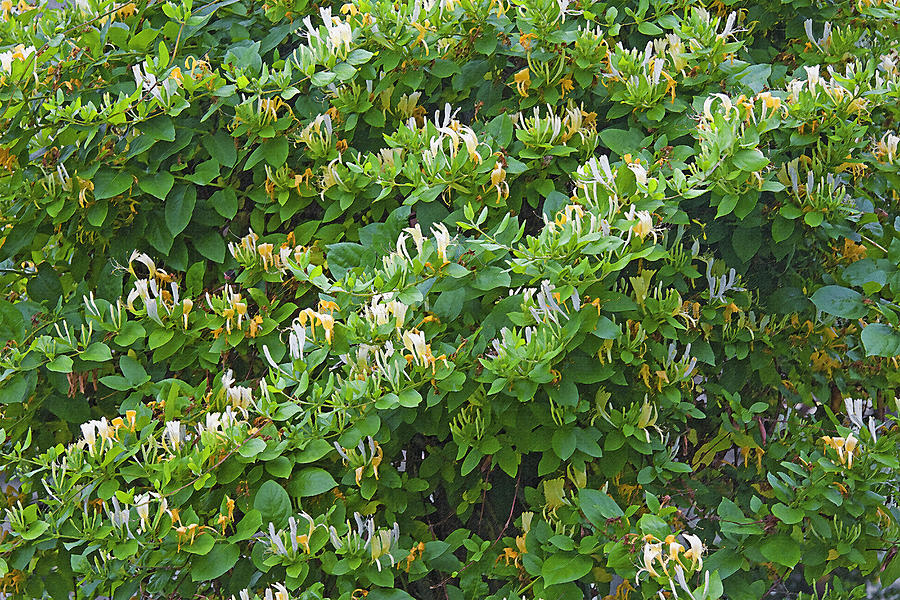
Why Not Plant A Honeysuckle???...

  
 I live in Ohio, planting zone 5, where the temps can reach the 90s in summer and -10 below in winter.  My big honeysuckle bush seemed to be winter-killed for a couple of years, but I checked it this spring and, --- it's alive!!!...   All it needs is trimming of the dead wood and some basic all purpose fertilizer.  Honeysuckles smell positively great and provide winter protection for birds who can shelter from storms among their thick branches.  Hummingbirds are also attracted to honeysuckles.  You can plant them in almost any location except hot, hot sunlight all day long.  Their roots need a bit of shade, so light with dappled shade would be ideal.  Mine is growing on the north side of my house.

   Most species of honeysuckle, Lonicera, are hardy twining climbers, with a large minority of shrubby habit; a handful of species (including Lonicera hildebrandiana from the Himalayan foothills and L. etrusca from the Mediterranean) are tender and can only be grown outside in subtropical zones. The leaves are opposite, simple oval, 1–10 cm long; most are deciduous but some are evergreen. Many of the species have sweetly scented, bilaterally symmetrical flowers that produce a sweet, edible nectar, and most flowers are borne in clusters of two (leading to the common name of "twinberry" for certain North American species). Both shrubby and vining sorts have strongly fibrous stems which have been used for binding and textiles. The fruit is a red, blue or black spherical or elongated berry containing several seeds; in most species the berries are mildly poisonous, but in a few (notably Lonicera caerulea) they are edible and grown for home use and commerce. Most honeysuckle berries are attractive to wildlife, which has led to species such as L. japonica and L. maackii spreading invasively outside of their home ranges. Many species of Lonicera are eaten by the larvae of some butterflies.

Thursday, May 31, 2018

The Folklore Of The Hawthorn Tree...

The Scots saying "Ne'er cast a cloot til Mey's oot" conveys a warning not to shed any cloots (clothes) before the summer has fully arrived and the Mayflowers (hawthorn blossoms) are in full bloom.
The custom of employing the flowering branches for decorative purposes on 1 May is of very early origin, but since the adoption of the Gregorian calendar in 1752, the tree has rarely been in full bloom in England before the second week of that month. In the Scottish Highlands, the flowers may be seen as late as the middle of June. The hawthorn has been regarded as the emblem of hope, and its branches are stated to have been carried by the ancient Greeks in wedding processions, and to have been used by them to deck the altar of Hymenaios. The supposition that the tree was the source of Jesus's crown of thorns doubtless gave rise around 1911 to the tradition among the French peasantry that it utters groans and cries on Good Friday, and probably also to the old popular superstition in Great Britain and Ireland that ill luck attended the uprooting of hawthorns. Branches of Glastonbury thorn (C. monogyna 'Biflora',[7] sometimes called C. oxyacantha var. praecox), which flowers both in December and in spring, were formerly highly valued in England, on account of the legend that the tree was originally the staff of Joseph of Arimathea.
Robert Graves, in his book The White Goddess, traces and reinterprets many European legends in which the whitethorn (hawthorn), also called the May-tree, is central.

Hawthorn trees demarcate a garden plot. According to legend, they are strongly associated with the fairies.
In Celtic lore, the hawthorn plant was used commonly for inscriptions along with yew and apple. It was once said to heal the broken heart. In Ireland, the red fruit is, or was, called the Johnny MacGorey or Magory.
Serbian and Croatian folklore notes hawthorn (Serbian глог, Croatian glog) is particularly deadly to vampires, and stakes used for their slaying must be made from the wood of the thorn tree.
In Gaelic folklore, hawthorn (in Scottish Gaelic, sgitheach and in Irish, sceach) 'marks the entrance to the otherworld' and is strongly associated with the fairies. Lore has it that it is very unlucky to cut the tree at any time other than when it is in bloom; however, during this time, it is commonly cut and decorated as a May bush (see Beltane). This warning persists to modern times; it has been questioned by folklorist Bob Curran whether the ill luck of the De Lorean Motor Company was associated with the destruction of a fairy thorn to make way for a production facility.
Hawthorn trees are often found beside clootie wells; at these types of holy wells, they are sometimes known as rag trees, for the strips of cloth which are tied to them as part of healing rituals. 'When all fruit fails, welcome haws' was once a common expression in Ireland.
According to a Medieval legend, the Glastonbury thorn, C. monogyna 'Biflora', which flowers twice annually, was supposed to have miraculouslygrown from a walking stick planted by Joseph of Arimathea at Glastonbury in Somerset, England. The original tree was destroyed in the 16th century during the English Reformation, but several cultivars have survived. Since the reign of King James I, it has been a Christmas custom to send a sprig of Glastonbury thorn flowers to the Sovereign, which is used to decorate the royal family's dinner table.

Wednesday, May 30, 2018

Elves, --- From "Norse Mythology For Smart People"...


ELVES


An elf (Old Norse álfr, Old English ælf, Old High German alb, Proto-Germanic *albaz) is a certain kind of demigod-like being in the pre-Christian mythology and religion of the Norse and other Germanic peoples.
The elves are luminous beings, “more beautiful than the sun,”[2] whose exalted status is demonstrated by their constantly being linked with the Aesir and Vanir gods in Old Norse and Old English poetry.[3] The lines between elves and other spiritual beings such as the gods, giants, dwarves, and land spirits are blurry, and it seems unlikely that the heathen Germanic peoples themselves made any cold, systematic distinctions between these various groupings. It’s especially hard to discern the boundary that distinguishes the elves from the Vanir gods and goddesses. The Vanir god Freyr is the lord of the elves’ homeland, Alfheim,[4] and at least one Old Norse poem repeatedly uses the word “elves” to designate the Vanir.[5] Still, other sources do speak of the elves and the Vanir as being distinct categories of beings, such that a simple identification of the two would be misguided.
The elves also have ambivalent relations with humans. Elves commonly cause human illnesses,[6] but they also have the power to heal them, and seem especially willing to do so if sacrifices are offered to them.[7]Humans and elves can interbreed and produce half-human, half-elfin children, who often have the appearance of humans but possess extraordinary intuitive and magical powers.[8][9] Humans can apparently become elves after death, and there was considerable overlap between the worship of human ancestors and the worship of the elves.[10][11]
The worship of the elves persisted centuries after the Germanic people’s formal conversion to Christianity, as medieval law codes prohibiting such practices demonstrate. Ultimately, then, their veneration lasted longer than even that of the gods.

Tuesday, May 29, 2018

Edvard Grieg, --- "Elves' Dance"...

"The Dark One," From The Movie, "The Secret Of Roane Innish," --- Part. 2...


The word roane is pronounced "ron".  It's Irish Gaelic for seal.  Innish means an island.

"The Dark One, " From The Movie, "The Secret Of Roane Innish," --- Part 1...


Little sensitive and darling Fiona, played by Jeni Courtney, stole this film.  I just loved her.  Selkies, in their human form, were said to be darker complected than most people in the isles and they often had black or gray spots and speckles on their skins like seals, usually on their necks and chests.

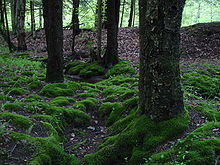
I Love Moss... [It looks so ancient, soft and beautiful!!!]...

Tionesta-ac-moss2.jpg

Mosses are small flowerless plants that typically grow in dense green clumps or mats, often in damp or shady locations. The individual plants are usually composed of simple leaves that are generally only one cell thick, attached to a stem that may be branched or unbranched and has only a limited role in conducting water and nutrients. Although some species have conducting tissues, these are generally poorly developed and structurally different from similar tissue found in vascular plants.[3] Mosses do not have seeds and after fertilisation develop sporophytes with unbranched stalks topped with single capsules containing spores. They are typically 0.2–10 cm (0.1–3.9 in) tall, though some species are much larger. Dawsonia, the tallest moss in the world, can grow to 50 cm (20 in) in height.
Mosses are commonly confused with lichens, hornworts, and liverworts.[4] Lichens may superficially look like mosses, and have common names that include the word "moss" (e.g., "reindeer moss" or "iceland moss"), but are not related to mosses.[4]:3 Mosses used to be grouped together with the hornworts and liverworts as "non-vascular" plants in the former division "bryophytes", all of them having the haploid gametophyte generation as the dominant phase of the life cycle. This contrasts with the pattern in all vascular plants (seed plantsand pteridophytes), where the diploid sporophyte generation is dominant.
Mosses are now classified on their own as the division Bryophyta. There are approximately 12,000 species.[2]
The main commercial significance of mosses is as the main constituent of peat (mostly the genus Sphagnum), although they are also used for decorative purposes, such as in gardens and in the florist trade. Traditional uses of mosses included as insulation and for the ability to absorb liquids up to 20 times their weight.

Moss is often considered a weed in grass lawns, but is deliberately encouraged to grow under aesthetic principles exemplified by Japanese gardening. In old temple gardens, moss can carpet a forest scene. Moss is thought to add a sense of calm, age, and stillness to a garden scene. Moss is also used in bonsai to cover the soil and enhance the impression of age.[32] Rules of cultivation are not widely established. Moss collections are quite often begun using samples transplanted from the wild in a water-retaining bag. However, specific species of moss can be extremely difficult to maintain away from their natural sites with their unique requirements of combinations of light, humidity, substrate chemistry, shelter from wind, etc.
Growing moss from spores is even less controlled. Moss spores fall in a constant rain on exposed surfaces; those surfaces which are hospitable to a certain species of moss will typically be colonised by that moss within a few years of exposure to wind and rain. Materials which are porous and moisture retentive, such as brick, wood, and certain coarse concrete mixtures are hospitable to moss. Surfaces can also be prepared with acidic substances, including buttermilk, yogurt, urine, and gently puréed mixtures of moss samples, water and ericaceous compost.
In the cool cloudy damp Pacific Northwest, moss is sometimes allowed to grow naturally as a lawn substitute, one that needs little or no mowing, fertilizing or watering. In this case, grass is considered to be the weed.[33] Landscapers in the Seattle area sometimes collect boulders and downed logs growing mosses for installation in gardens and landscapes. Woodland gardens in many parts of the world can include a carpet of natural mosses.[29] The Bloedel Reserve on Bainbridge Island, Washington State, is famous for its moss garden. The moss garden was created by removing shrubby underbrush and herbaceous groundcovers, thinning trees, and allowing mosses to fill in naturally.[34]
Mosses are sometimes used in green roofs. Advantages of mosses over higher plants in green roofs include reduced weight loads, increased water absorption, no fertilizer requirements, and high drought tolerance. Since mosses do not have true roots, they require less planting medium than higher plants with extensive root systems. With proper species selection for the local climate, mosses in green roofs require no irrigation once established and are low maintenance.[35]


I was delighted to find some moss growing around the roots of our mulberry tree on the north side of our property.


Wednesday, May 23, 2018

The Blackthorn...

Sloe flower, fruit, seed and leaves illustrated by Otto Wilhelm Thomé (1885)
The specific name spinosa is a Latin term indicating the pointed and thornlike spur shoots characteristic of this species. The common name "blackthorn" is due to the thorny nature of the shrub, and its very dark bark.
The word commonly used for the fruit, "sloe" comes from Old English slāh. The same word is noted in Middle Low German, historically spoken in Lower Saxony, Middle Dutch sleuuwe or, contracted form, slē, from which come Modern Low German words: slē, slī, and Modern Dutch slee, Old High German slēha", "slēwa, from which come Modern German Schlehe and Danish slåen.
The names related to 'sloe' come from the Common Germanic root *slaiχwōn. Cf. West Slavic / Polish śliwa; plum of any species, including sloe śliwa tarnina—root present in other Slavic languages, e.g. Croatian/Serbian šljiva / шљива, and Russian слива.

Sloe-eyed

The expression "sloe-eyed" for a person with dark eyes comes from the fruit, and is first attested in A. J. Wilson's 1867 novel Vashti.[7]

Ecology

Pocket Plum gall on Blackthorn, caused by the fungus Taphrina pruni
The foliage is sometimes eaten by the larvae of Lepidoptera, including the small eggar moth, emperor moth, willow beauty, white-pinion spotted, common emerald, November moth, pale November moth, mottled pug, green pug, brimstone moth, feathered thorn, brown-tail, yellow-tail, short-cloaked moth, lesser yellow underwing, lesser broad-bordered yellow underwing, double square-spot, black and brown hairstreaks, hawthorn moth (Scythropia crataegella) and the case-bearer moth Coleophora anatipennella. Dead blackthorn wood provides food for the caterpillars of the concealer moth Esperia oliviella.
The pocket plum gall of the fruit caused by the fungus Taphrina pruni produces an elongated and flattened gall, devoid of a stone.

Uses

Global Plum and sloe output in 2005
Grafted blackthorn tree; called a Husband and Wife tree
The shrub, with its savage thorns, is traditionally used in Britain and other parts of Northern Europe to make a cattle-proof hedge.
The fruit is similar to a small damson or plum, suitable for preserves, but rather tart and astringent for eating, unless it is picked after the first few days of autumn frost. This effect can be reproduced by freezing harvested sloes.
The juice is used in the manufacture of fake port wine, and used as an adulterant to impart roughness to genuine port. In rural Britain a liqueur, "sloe gin", is made by infusing gin with sloes and sugar. Vodka can also be infused with sloes.
In Navarre, Spain, a popular liqueur called pacharán is made with sloes. In France a similar liqueur called épine or épinette or troussepinette is made from the young shoots in spring. In Italy, the infusion of spirit with the fruits and sugar produces a liqueur called bargnolino (or sometimes prunella)—as well as in France where it is called "prunelle" (also the common name of the shrub) or "veine d'épine noire". Wine made from fermented sloes is made in Britain, and in Germany and other central European countries.
Sloes can also be made into jam, chutney, and used in fruit pies. Sloes preserved in vinegar are similar in taste to Japanese umeboshi. The juice of the fruits dyes linen a reddish colour that washes out to a durable pale blue.
Blackthorn makes an excellent fire wood that burns slowly with a good heat and little smoke. The wood takes a fine polish and is used for tool handles and canes. Straight blackthorn stems have traditionally been made into walking sticks or clubs (known in Ireland as a shillelagh). In the British Army, blackthorn sticks are carried by commissioned officers of the Royal Irish Regiment; this is a tradition also in Irish regiments in some Commonwealth countries.
The leaves resemble tea leaves, and were used as an adulterant of tea.
Shlomo Yitzhaki, a Talmudist and Tanakh commentator of the High Middle Ages, writes that the sap (or gum) of P. spinosa (which he refers to as the prunellier) was used as an ingredient in the making of some inks used for manuscripts.
The fruit stones have been found in Swiss lake dwellings. Evidence of the early use of sloes by man is found in the famous case of a 5,300-year-old human mummy discovered in 1991 in the Ötztal Alps along the Austrian-Italian border (nick-named Ötzi): among the stomach contents were sloes.
A "sloe-thorn worm" used as fishing bait is mentioned in the 15th-century work, The Treatyse of Fishing with an Angle, by Juliana Berners.
The flowering of the blackthorn may have been associated with the ancient Celtic celebration of Imbolc.[18]